To All Our Visitors "ALOHA!" and "Mahalo!"

Racing Crow Data Disaster Backup for Business

RACING CROW !!! <--- CLICK!
Showing posts with label Bancopious Steven Banass Hawaii Chicago Professional Business Services Consulting. Show all posts

Friday, March 23, 2012

Champion Surfer Opens New Surf School at Waikiki Beach Marriott Resort & Spa


WAIKIKI, OAHU, HI--(Marketwire - March 22, 2012) - Waikiki Beach Marriott Resort & Spa is making it easier to "hang ten" with the introduction of a new surf school and Waikiki beach hotel package!
Champion long board surfer Kai Sallas continues his father's tradition of surf instruction with the creation of Pro Surf School Hawaii, located at Waikiki Beach Marriott Resort & Spa. His long history and love for the sport began when he was 12 years old, stemming from dad Jr. Sallas who taught young Kai and helped revitalize the surfing culture as one of the original Waikiki Beach Boys. Now, the Waikiki oceanfront hotel is offering a value-added Surf Package for guests to enjoy the waves and learn to surf with Kai and his professional team!
"With Pro Surf School Hawaii now on-site, our guests have the perfect opportunity to learn water safety and surf techniques, tailored to his or her skill level," said Michael Nisky, general manager of Waikiki Beach Marriott Resort & Spa. "Our beachfront location is especially convenient for guests to practice the skills they have learned, with a safe surf break just a quick paddle away."
Starting at $244 per room night, the Surf Package at this Waikiki resort includes the following for two people:
  • Deluxe guest room with lanai (balcony)
  • Two-hour surf lesson by professional surfers -- includes surfboard, leash, rash guard, and booties provided
  • Two-day surfboard rental
A minimum three-night stay is required. Children must be at least 11 years old and know how to swim. Valid through December 25, 2012. Based on availability, restrictions may apply. For reservations, visit http://www.marriott.com/hotels/travel/hnlmc-waikiki-beach-marriott-resort-and-spa/ or call 1-800-367-5370 and quote promotional code SPO.
Located in the tour lobby of Waikiki Beach Marriott Resort & Spa, Pro Surf School Hawaii also offers lessons in stand up paddle and surf tours. It is open daily from 8:00 a.m. to 5:00 p.m. For more information, visit www.prosurfschoolhawaii.com or call (808) 343-9667.
About Waikiki Beach Marriott Resort & SpaWaikiki Beach Marriott Resort & Spa fronts the best stretch of Waikiki Beach. Conveniently located in the heart of Waikiki, the Honolulu hotel offers 1,310 refurbished guest rooms and suites with private lanai providing spectacular views of world-famous Diamond Head and Waikiki Beach. Other amenities include Kuhio Beach Grill, featuring the best in Pacific Rim cuisine; Sansei Seafood Restaurant & Sushi Bar and d.k Steak House; Arancino di Mare Italian Restaurant; newly transformed Moana Terrace, offering live Hawaiian entertainment nightly; Seattle's Best Coffee; Paul Brown's Spa Olakino * Salon; Pro Surf School Hawaii; two freshwater, heated swimming pools; 10-person whirlpool; new 24-hour fitness facility; business center with 24-hour Internet access; high-speed and wireless Internet access throughout the resort's guest rooms and public spaces; shops and boutiques; and Hawaiian cultural activities. For more information, visit http://www.marriott.com/hotels/travel/hnlmc-waikiki-beach-marriott-resort-and-spa/. Follow Waikiki Beach Marriott Resort & Spa on Twitter @marriottwaikiki or like us on Facebook at www.facebook.com/MarriottWaikiki.
Visit Marriott International, Inc. (NYSE: MAR) for company information. For more information or reservations, please visit our web site at www.marriott.com, and for the latest company news, visit www.marriottnewscenter.com.

Friday, February 24, 2012

Shortcut #2 to Losing Your Data

#2 Trust Your Fellow Coworkers to Follow Policy

Shortcut to Losing Your Data

Human error is the second leading cause of data loss. Human error ranges from accidental deletion of files and records to ignoring policies regarding data to rebooting systems without proper shutdown procedures. Blind belief and trust in your fellow coworkers to not only follow policy but to not make any mistakes at all are fundamental to using this shortcut to its fullest potential in losing your data.

Taking Another Path

There are two fundamental reasons for human error: ignorance and arrogance. Attempting to change human nature is the height of arrogance. People have a tendency to be incredibly poor at following policy. Thus specifying that all "important" data will be stored only on centralized corporate servers and storage tends to fail as soon as a C-level executive loses the data on their notebook. But even when people try their best to follow policy, accidents such as file and record deletion will occur.

The best defenses against human error are automation and retention. Automation allows policies and procedures to be created and automatically executed. Retention allows recovery of data even when the data loss isn’t noticed for some period of time.

Retention is one of the fundamental differentiations between backup and simple high availability (which is typically achieved with some type of replication) - high availability handles hardware failure well but does a poor job of handling logical failures such as those caused by human error - because logical failure is simply replicated in highly available systems. Of course, protecting against hardware failure using high availability and against all types of failure using backup is a common technique for protecting data and systems.

CALL 1-877-RACINGCROW-1 TODAY !
Ask for The Bancopious Discount!

Friday, February 17, 2012

Waikiki casino bill stalls in House panel


HONOLULU - A proposed stand-alone casino in Waikiki has stalled in a state House committee.
House Bill 2788 would also create the Hawaii Gaming Commission and impose a 15 percent tax on the casino's gross receipts.
Committee Chairman Tom Brower said he wanted to take up the measure to keep the conversation open.
"Is gambling evil, or do people lack self-control?" Brower asked at a hearing this week. "Personally, I don't think gambling can make people anything that they aren't already."
The committee's decision Monday to defer the bill means the casino proposal is likely dead for the session, although it can be brought up again at any time before the Legislature adjourns May 3.
Most of the testimony submitted at the hearing opposed gambling, including that from Honolulu's mayor and police department, as well as the Hawaii Tourism Authority. The state departments of Budget and Finance and Business, Economic Development and Tourism submitted testimony without taking a position.
Most opponents pointed to problems associated with legalized gambling, such as increased crime, unemployment, bankruptcy and family dysfunction.
However, about two dozen supporters arrived at the hearing carrying signs and wearing blue T-shirts that read "Casino Now!"
The bill to allow a 20-year license for a single casino was introduced by Speaker Emeritus Rep. Joe Souki of Maui. The measure defines a casino as having at least 1,500 slot machines.
Brower said he has done extensive research on the issue and found that 3 to 6 percent of gamblers would be expected to have problems with gambling addiction.
"Gambling could be a new industry for Hawaii to increase tax revenue and lessen future tax increases on residents," he said in a news release. "Other world cities show that if gambling is done right, residents benefit; if done wrong, some may suffer."
Gaming bills are regularly introduced at the Legislature, but Hawaii remains one of two states with no legalized form of gambling. Utah, the only other state with no gaming, has five neighboring states with 280 casinos within driving distance, noted lobbyist John Radcliffe.
Radcliffe, one of legalized gambling's most vocal proponents, told lawmakers he has been bringing economic data to the Legislature for 12 years. This data indicate that 69 percent of Hawaii residents travel to Las Vegas, but 42 percent would stay home and gamble here if it were an option.
"We export gamblers at no benefit to our state, and we export their $1 billion in after-tax dollars, too," Radcliffe said.
Grace Furukawa from the League of Women Voters urged committee members to table the idea.
"Slot machines alone are the crack cocaine of gambling and promise the loss of one job from small business a year," Furukawa said, referring to statistics from the Hawaii Coalition Against Legalized Gambling.
Credit for this story given to the link below
http://www.mauinews.com/page/content.detail/id/558199/Waikiki-casino-bill-stalls-in-House-panel.html?nav=5031

'The Secret World of Arrietty': Will Japan's Pixar Have Its Big U.S. Hit?

The beloved studio behind Spirited Away and My Neighbor Totoro makes its most ambitious play for American audiences yet with this gentle, well-made adaptation of The Borrowers.

arrietty buckwalter cat 615 disney.jpg
Disney
As the projectors warm up in U.S. theaters today, 1300 of them are being prepped to pass the latest animated release from Japanese animation powerhouse Studio Ghibli through their lenses. While that's fewer than half the number of screens that will host each of this week's other two wide releases (Ghost Rider: Spirit of Vengeance and This Means War), it's a significant number: Disney, the company responsible for distributing Ghibli releases in the United States, has never opened one of the Studio Ghibli's films on nearly as many screens. While past titles like Spirited Away and Princess Mononoke have been blockbusters overseas, they've been modestly successful limited releases here. With The Secret World of Arrietty, Disney appears confident this is the film that will break Studio Ghibli's distinctive style of animation beyond its niche audience.
Those high expectations are the result of a consistent flow of meticulously crafted, memorable that have reached far beyond the world of just fans of Japanese animation, dating back to 1986's Castle in the Sky. Just as with Pixar in the U.S., Studio Ghibli crafts films that are often able to compete on equal footing with live-action cinema, rising above prejudices that animation is just for kids. Its reputation reached its zenith in 2001 with Hayao Miyazaki's Spirited Away, which won the top prize at that year's Berlin Film Festival in addition to becoming the first foreign-produced film to win an Oscar for Best Animated Picture. The film also took in $274 million dollars worldwide; big box-office returns and No. 1 openings in Japan have become routine for the studio, particularly for films directed by its co-founder, anime legend Miyazaki.

Yonebayashi has no need for magic in this story: Arrietty's secret world is as foreign as Alice's Wonderland.
Miyazaki didn't direct Arrietty, yet it's impossible not to see his stamp on the film. He produced and co-wrote it, but handed over directorial duties to longtime apprentice Hiromasa Yonebayashi, who has worked as an animator on every one of the Miyazaki's projects since Mononoke. The style and the themes remain familiar: gorgeous hand-drawn animation with water-colored landscapes; a strong connection to the natural world; a pacifistic inclination towards resolving conflicts by means other than violence; a strong female protagonist who is also a child.
That protagonist is the titular Arrietty (voiced by Bridgit Mendler in the U.S. version of the movie), the 14-year-old only child of a family of "Borrowers"—a race of four-inch-tall, otherwise human-like beings who live in the walls and under the floorboards of the houses of full-sized "Human Beans," as the Borrowers call them. Her family lives in the country house of an elderly woman named Sadako (Carol Burnett), making their way by taking little things that won't be missed by their larger counterparts: a cube of sugar, a square of tissue, a discarded pin. Expeditions into the cavernous world of the Beans are potentially dangerous excursions—rappelling from countertops to floors, or racing around the shadows while hoping to go unnoticed by the pudgy housecat.
As Arrietty begins, two things are changing in the world of its main character. First, a sickly teenage boy, Shawn (David Henrie), has moved into the house with Aunt Sadako, and has caught a glimpse of Arrietty hiding in the grasses immediately upon his arrival. Secondly, it is time for a rite of passage: her first borrowing. It's a mishap during the latter event that confirms for Shawn that he did indeed see what he thought he did, and makes her family believe they need to leave now that they've been discovered. While Arrietty insists that Shawn means them no harm, her mother chides her, "The children are more vicious than the grownups."
Mom is a worrywart voiced by Amy Poehler, who, as one might expect, provides some of the film's most comic moments with her anxious histrionics. More surprising is the restrained turn from Will Arnett as Arrietty's father. Arnett plays it almost entirely straight here, playing Arrietty's father as a plain-spoken, practical, but loving adventurer. In his comedic roles, his distinctive voice—an instrument like deep pile velvet studded with pure granite gravel—is often the subject of self parody, but here he becomes the solid, comforting influence for a family in danger.
For all the thematic similarities to Miyazaki's work, there's one familiar item missing from Arrietty: magic. Many of the previous Studio Ghibli exports take place in worlds where magic and mysticism—either based around Japanese mythology or from Miyazaki's own mind—are a part of the everyday, from the woodland spirts of My Neighbor Totoro to the dragons, witches, and fantastical alternate universe of Spirited Away. Sure, Arrietty features four-inch-tall people, but apart from their size, the world they exist in is entirely familiar. There are no ghosts, no unfamiliar creatures, no spirit worlds, no moving castles. Just a quaint country house populated by big people, little people, a cat, a crow, and all manner of insects.
But Yonebayashi makes the normal world seem magical by recontextualizing it using the new proportions as seen by the Borrowers. Most of the movie is from their perspective, and he beautifully displays the familiar as seen through different eyes. Normal rooms become massive chambers; a Borrower exiting a hole in the wall into the big house's kitchen is like a normal sized person walking into the immensity of a domed stadium. Pill bugs, rolled up into a protective posture, become balls for play. Postage stamps are wall hangings. Drops of water hold the equivalent of buckets, and move in fascinating new ways. And when the Borrowers have interactions with the Beans, the sound becomes magnified, the ground shakes, and the frame is filled as if by Godzilla. Yonebayashi has no need for magic in this story: Arrietty's secret world is as foreign as Alice's Wonderland.
Still, it's a gentler, less jarring fantasy than a Spirited Away, a fact that may also play into Disney's feeling that this could be a breakthrough title for Japanese animation in the U.S. It's a gentler film all around, really. Yonebayashi is willing to let the story play out more languidly than most animated films. He'll hold the frame after a character exits long enough to watch a ladybug stretch its wings and take flight, or linger on a painterly image of Shawn lying contemplatively in a grassy field. The lush greenery of the yard and the surrounding forest are so vivid that one can almost smell the rich smell of a summer countryside in the theater. All that is nicely balanced by the adventure aspects of the story, which feel legitimately dangerous and provide well-paced contrast the film's more placid moments.
Arrietty is an important film for Studio Ghibli. For an animation house identified so closely with the works of Miyazaki, it demonstrates that there is a depth of talent here that should allow them to continue making distinctive hand-drawn films that carry on his tradition, even after he has stopped making them himself. In that context, whether Disney's strategy to make this an unprecedented success works or not is immaterial. There has long been a loyal audience for Miyazaki films here, and with films like Arrietty, that fanbase can feel confident that they'll be in good hands with a Studio Ghibli film, whether from Miyazaki or another artist onto whom he has passed his craft.
Credit for this article given to link below
http://www.theatlantic.com/entertainment/archive/2012/02/the-secret-world-of-arrietty-will-japans-pixar-have-its-big-us-hit/253215/

Monday, February 13, 2012

Shortcuts to Losing Your Data


Shortcuts to Losing Your Data


In this chapter we’re going to explore the 7 shortcuts to losing your data one-by-one. We’re going to do so by discussing each of these causes of data loss from the perspective of paths. In each section, we’ll first discuss the path associated with the shortcut to losing your data. As illustrated in the picture to the right, this shortcut is designed not only to facilitate your losing your data - but to put you on the fast track for early retirement.

After the shortcut to losing your data is explored, we then describe taking another path - one in which you don’t lose your data and don’t put your job at risk. This path, depicted at the bottom left of this page, is of course the one we recommend.


NUMBER 1: Ignore Hardware Failure


Shortcut to Losing Your Data


Hardware failure is the leading cause of data loss; thus ignoring hardware failure is the most important shortcut you can take in order to lose data. You have several choices with respect to taking this shortcut. The most straightforward technique to lose your data is to imply ignore that hardware failure can occur and simply not backup your systems and data. Of course, that’s a bit crass - there are more subtle ways to ensure data loss.

Another age-old option to help you lose your data is to use tape as your backup medium. With the high failure rates associated with tape, sooner or later you’re assured that you’re going to need to recover your data and not be able to do so.

A creative technique to ensure you will eventually lose your data is to use your SAN or NAS storage device as both the source of the backup and the target of a backup. Note that I’m not referring to snapshots in between physical transfers of data off the SAN or NAS; I’m talking about using your SAN and NAS for primary storage and for backup storage exclusively.


Taking Another Path


To protect yourself from hardware failure, you have to move your data from primary storage to a completely separate secondary storage. That secondary storage can be (and should be) less expensive than your primary storage, but it has to have RAS (Reliability, Availability, Serviceability) characteristics that are as good or better than your primary storage. Those

requirements rule out tape as well as ruling out partitioned primary storage (SAN or NAS) - although SAN and NAS snapshotting may be used between primary backup protection. The best approach is some type of D2D (Disk-to-Disk) backup. The advantage to D2D backup is that you are using secondary media with higher reliability characteristics than tape while still insuring that you have a physically separate secondary storage set so that you can survive hardware and system failure.


TOMORROW:  # 2 Trust Your Fellow Coworkers to Follow Policy
Call Steve today at RACING CROW for a FREE Quote and Product Presentation
1-877-MY-CROW-1

Chicago Auto show: Road looks smoother for auto industry

Easier credit, aging cars lead to predictions of sales growth in 201


What will 2012 bring for the auto industry?

Are consumers confident that the economy is going to do well, their jobs are secure, and they can make the mortgage or rent payment with money left for a car?

Are banks confident enough to make the loans consumers need to buy that vehicle?

The strength of the auto market depends on the strength of the economy.

"That's the single biggest challenge for 2012," said Joe Phillippi, principal of AutoTrends, an automotive research and consulting firm. "The job picture has gotten better and employment rates are better, but there still are underemployed and unemployed and that impacts the money banks will lend for a car and the amount consumers will spend on a car."

Sales forecasts for 2012 vary, with most predicting 13 million to 14 million units. That would be up from the 12.8 million cars and light trucks sold in 2011 and 11.6 million in 2010. It also would represent the third consecutive year of increases after sales tanked at 10.4 million in 2009, which resulted in plant closings, layoffs, production cuts, wage concessions and Chapter 11 filings by General Motors and Chrysler.

Paul Taylor, chief economist for the National Automobile Dealers Association, predicts sales of 13.9 million for 2012. Taylor insists that the aging vehicle population, easier credit and aggressive incentives from manufacturers will keep things rolling.

Most analysts join Taylor in citing an aging vehicle population for continued gains.

"The average age of vehicles on the road is now 11 years old and the rate of scrappage is not only the highest it's been since World War II, it's higher than the current new vehicle production rate," said Phillippi. "Sales could reach 14 million units in 2012."

Also encouraging is that banks' willingness to make car loans.

"Credit already is loosening, unlike two to three years ago when banks wouldn't lend any money," said Art Spinella, general manager of CNW Marketing Research, a company that looks at why people buy the vehicles they do. "Showroom traffic is up, and that's good. So the economy is growing, but still at a snail's pace. We look for sales to reach about 13.8 million in 2012, unless the economy falters, loans dry up, and then sales would only reach about 13 million units."

Rebecca Lindland, analyst with IHS Automotive agrees.

"People with money have given the market strength. Well-equipped cars and luxury models are doing well and transaction prices have risen," she noted, which fuels industry profits.

"But at the same time, sales could be 1.5 million units higher than they are because we're not seeing as many first-time, entry-level buyers coming into the market," Lindland said. "People (are) still concerned about jobs and are finding that the economic recovery is moving painfully slow. So rather than buy, they are delaying getting back into the market."

"

The Chicago Auto Show serves as a barometer of sales prospects and whether people visit the show out of an eagerness to commit to years of monthly payments, or simply to relieve cabin fever while waiting for better times.

"We keep tabs on the crowds and how it effects showroom traffic and sales during and after the show," said Dave Sloan, president of the Chicago Automobile Trade Association, show sponsor. "Advance ticket sales for both the show and the First Look for Charity preview night were up this year, and so was exhibit space — reasons to be optimistic that we'll see another year of growth."

Two major auto shows have been held in Los Angeles and Detroit, where crowds were large and enthusiastic "and the mood at both shows was positive and optimistic," noted Aaron Bragman, senior analyst with IHS Automotive.

Domestic automakers have plenty of reason for optimistism. They are starting to report profits, money that can be invested in new vehicles and technology that has been in short supply in recent years.

Besides the tough cuts, union concessions and less reliance on incentives, "the domestic industry has lowered its breakeven point by more than 1 million units so that even when it sells fewer vehicles than in the past, it still makes a profit and doesn't have to rely on incentives," said Dave Cole, chairman of Auto Harvest, an Internet site devoted to developing innovation and intellectual properties for the auto industry.

And this has help turn the $2,000-per-vehicle cost advantage once help by foreign manufacturers to the domestics.

"With a $2,000 advantage, foreign automakers set the prices that the domestics had to match, which they did by reducing content and therefore reducing value and profit. Now the domestic automakers enjoy the $2,000 cost advantage and they set prices and are the ones adding content and value," Cole points out, which is why economy cars are now sporting leather heated seats and Bluetooth hands-free phone technology.

Finally, a host of new vehicles on the auto-show circuit will fuel industry growth.

Cadillac has a new, entry-level sedan called ATS that will compete against the BMW 3-series. Cadillac's new XTS flagship sedan replaces the larger STS and DTS, while Buick taps into demand for smaller crossovers with Encore that's sized well below the midsize Enclave. Dodge brings back an old name — Dart — as a successor to the compact Caliber, while Ford takes the wraps off a redesigned midsize Fusion sedan offered with a choice of gas, gas-electric hybrid or plug-in battery power to satisfy those who want midsize performance and compact mileage.

Notice the emphasis on smal , including the compact 2012 Hyundai Elantra and entry-level 2012 Range Rover Evoque, voted North American Car and Truck of the Year by the nation's automotive press.

When talking small, however, there should be an asterisk.

"That's because small cars no longer have to be econoboxes that put you in the penalty box and make you suffer riding in them," says IHS's Bragman. "Small cars now offer not only 40 mpg, but are bigger, roomier, loaded with content and pleasant to spend time in."

Thursday, February 9, 2012

And the winner of HAWAII Magazine’s Honolulu Festival Flyaway sweepstakes

Hawaii_Oahu_Honolulu_festival

Congratulations to Ashleigh Allred of Salt Lake City, Utah — the winner of our HAWAII Magazine’s Honolulu Festival Flyaway sweepstakes.

Ashleigh’s name was drawn at random from more than 10,000 sweepstakes entries submitted through our Facebook page over the last three weeks. Her prize?

• Complimentary Hawaiian Airlines round-trip airfare for two passengers between Oahu and one of Hawaiian Airlines’ gateway cities on the U.S. Mainland.

• Five-days/four nights complimentary accommodations at the Waikiki Beach Marriott Resort & Spa, March 1-5, 2012.

• Two complimentary tickets to the Honolulu Festival Friendship Gala on Sat., March 3, 2012, and two VIP seats for the Honolulu Festival Waikiki Grand Parade on Sun., March 4.

The Honolulu Festival, now in its 18th year, is a celebration of music, art and culture that celebrates strong cultural ties between Hawaii and the Asia-Pacific region. Themed “Bonding Together, Hand In Hand,” this year’s festival, which begins on Fri., March 2 and wraps up on Sat., March 4, will feature its signature mix of arts and cultural displays, food events, and live performances from Japan, Taiwan, Korea, Australia, the Philippines, Tahiti, Alaska and, of course, Hawaii. The fest is slated to conclude with a grand evening parade along Kalakaua Avenue in Waikiki, and a dazzling Nagaoka Fireworks Show over Waikiki’s beaches.


Ashleigh, 23, (pictured, above) received e-mail notification of her win earlier this week — during a late-afternoon shift at her job in a Salt Lake City sandwich shop. Her reaction: “I started jumping up and down, I was so excited. My co-workers were like, ‘What is going on? Is this for real?’”

While assuring everyone that the sweepstakes win was indeed real-deal, Ashleigh asked for her 20-year-old sister to join her on the trip for two. Why? While Ashleigh has traveled to the Islands once — to visit Maui (about four years ago) — her younger sister has yet to touch down in Hawaii.

Now contending with Salt Lake City’s chilling February temperatures, the sisters are more than ready to sink their toes into the sand of a warm Oahu beach and enjoy the multicultural sunniness of the annual Honolulu Festival.

Mahalo to everyone in our HAWAII Magazine reader ohana who entered our Honolulu Festival Flyaway sweepstakes. And a grateful mahalo to Hawaiian Airlines, Waikiki Beach Marriott Resort & Spa, and Honolulu Festival for the wonderful prize package for our contest winner!

Congratulations, once again, Ashleigh! We hope that you and your lucky sister enjoy visiting Oahu!

Chicago passes on sticker design after allegations of gang symbols


Chicago decided to go with the runner-up design for the city’s new sticker after concerns were raised that gang symbols were drawn in the original winner, MyFoxChicago.com reported.
Days before the city sticker was to be printed, the city clerk’s office was alerted about a blogger who reportedly said the heart and the hands in the image are evocative of gang symbols. Susana Mendoza, the city clerk, investigated the matter and decided to pass on the design, the station reported.
Jody Weis, a former police superintendent, told the station, “I don't think it would look good if it's been interpreted that this gang is now on every police car as a city sticker.”
The picture was reportedly designed by a 15-year-old boy in a school for troubled youth who said the design was to honor first responders who rescued him from a fire when he was a child.
"As you can imagine, our student, his mother, and art teacher Janice Gould are devastated by this news. This was such a positive moment in this young man’s life," Jill Watson, director of communications at Lawrence Hall Youth Services, told the station.
The sticker, which will be the first to feature Mayor Rahm Emanuel’s name, will go on sale in June and about 1.2 million are expected to be sold.

Wednesday, February 8, 2012

Inspections for Hawaii ziplines under evaluation

HONOLULU - A growing sector of Hawaii's tourism industry could be changed by a proposal discussed Tuesday that requires more strict inspections of ziplines, which allow riders strapped to a harness and a cable to glide above forest canopies.
The bill was prompted by a fatal accident last fall that left one man dead and another critically injured when a tower collapsed, causing a test rider to fall 200 feet.
The measure, sponsored by a group of Senate Democrats and heard by committees in each chamber, would require the Department of Labor and Industrial Relations to conduct $100 inspections. But many in the industry question whether the proposal goes far enough.
"A fee of $100 is incredibly unrealistic at the majority of courses and may set a bad precedent," said Jeff Baldwin, operator of Piiholo Zipline on Maui.
Baldwin, who is in favor of the measure, said inspections generally cost $5,000 and stretch across multiple days. He said he's concerned the Labor Department "may be biting off more than they can chew."
The Labor Department opposed the measure as it was written, suggesting an audit might be more appropriate.
Director Dwight Takamine raised concerns about not having experts who can conduct the inspections. He also said the department doesn't have the funding to travel to remote Neighbor Island areas where most zipline tours are located.
There are more than a dozen companies that offer zipline tours and government officials call it a "growing industry."
Toni Marie Davis, executive director of Activities and Attractions Association of Hawaii, testified in support of the legislation, even as she told lawmakers that zipline deaths are rare.
She told senators at a joint committee meeting that the Big Island death in September was the only time such a fatality has occurred in Hawaii.
"Other than controversy in the rural south Hilo community with one specific zipline company, there are no issues, only irresponsible rhetoric," she said.
Davis also noted that most Hawaii zipline companies are already in compliance, pointing out that zipline companies can't get insurance without an inspection by a qualified specialist.
Without insurance, zipline operators can't join trade associations or get referrals from activity desks and hotels, she said.
The three Senate committees deferred decision-making until Feb. 14. Two House committees deferred decision-making on a similar version of the bill Tuesday and will introduce a resolution calling for an audit.
The victim of September's fatality was Lahaina resident Ted Callaway, 36. He was employed by the Maui-based company that built the zipline in Paukaa and was testing the facility that has not yet been opened to the public when a tower collapsed. Co-worker Curtis Wright, 43, of Miamisburg, Ohio, was seriously injured in the incident.

Thursday, January 26, 2012

Hawaii may keep track of all Web sites visited

Hawaii's legislature is weighing an unprecedented proposal to curb the privacy of Aloha State residents: requiring Internet providers to keep track of every Web site their customers visit.
John Mizuno, a Democratic state legislator in Hawaii, wants to require virtual dossiers to be compiled on state residents: two years&#39; worth of their Internet browsing.
John Mizuno, a Democratic state legislator in Hawaii, wants to require virtual dossiers to be compiled on state residents: two years' worth of their Internet browsing.
(Credit: Hawaii.gov)
Its House of Representatives has scheduled a hearing this morning on a new bill (PDF) requiring the creation of virtual dossiers on state residents. The measure, H.B. 2288, says "Internet destination history information" and "subscriber's information" such as name and address must be saved for two years.
H.B. 2288, which was introduced Friday, says the dossiers must include a list of Internet Protocol addresses and domain names visited. Democratic Rep. John Mizuno of Oahu is the lead sponsor; Mizuno also introduced H.B. 2287, a computer crime bill, at the same time last week.
Last summer, U.S. Rep. Lamar Smith (R-Texas) managed to persuade a divided committee in the U.S. House of Representatives to approve his data retention proposal, which doesn't go nearly as far as Hawaii's. (Smith, currently Hollywood's favorite Republican, has become better known as the author of the controversial Stop Online Piracy Act, or SOPA.)
It's not exactly clear what prompted Mizonu to introduce this measure, and he and the other sponsors did not immediately respond to a request for comment from CNET.
"I assume it's to make the data available to be subpoenaed when the state is pursuing people suspected of serious crimes, but I haven't heard anything from the representatives themselves," says Daniel Leuck, chief executive of Honolulu-based software design boutique Ikayzo.
Mizuno's proposal currently specifies no privacy protections, such as placing restrictions on what Internet providers can do with this information (like selling user profiles to advertisers) or requiring that police obtain a court order before perusing the virtual dossiers of Hawaiian citizens. Also absent are security requirements such as the use of encryption.
Because the wording is so broad and applies to any company that "provides access to the Internet," Mizuno's legislation could sweep in far more than AT&T, Verizon, and Hawaii's local Internet providers. It could also impose sweeping new requirements on coffee shops, bookstores, and hotels frequented by the over 6 million tourists who visit the islands each year.
"H.B. 2288 raises all of the traditional concerns associated with data retention, and then some," Kate Dean, head of the U.S. Internet Service Provider Association, which counts Verizon and AT&T as members, told CNET. "And this may be the broadest mandate we've seen."
Even the Justice Department has only lobbied the U.S. Congress to record Internet Protocol addresses assigned to individuals--users' origin IP address, in other words. It hasn't publicly demanded that companies record the destination IP addresses as well.
In Washington, D.C., the fight over data retention requirements has been simmering since the Justice Department pushed the topic in 2005, a development that was first reported by CNET. Proposals publicly surfaced in the U.S. Congress the following year, and President Bush's attorney general, Alberto Gonzales said it's an issue that "must be addressed." So, eventually, did FBI director Robert Mueller.
Democrat Jill Tokuda, the Hawaii Senate's majority whip, has introduced a companion bill, S.B. 2530, in the Senate. No hearing has been scheduled on Tokuda's bill.

Tuesday, January 24, 2012

Sen. Mark Kirk of Illinois expected to make full cognitive recovery from stroke

SPRINGFIELD, Ill. • Doctors say U.S. Sen. Mark Kirk of Illinois can expect to fully regain his cognitive abilities after a stroke and surgery over the weekend left him with limited movement. But recovery for the 52-year-old Republican could be slow, and some physical effects could be permanent.
"I think his prospects for a full mental recovery are pretty good. I think the prospects for his full physical recovery, particularly on the left side of his body, are not great," Dr. Richard Fessler, a neurosurgeon at Northwestern Memorial Hospital in Chicago, told reporters at a news conference in Chicago on Monday.
Fessler said it's "way too soon to try and predict" when Kirk might return to work in the Senate. "It's not going to be days," he added.
There was no indication from doctors that Kirk wouldn't be able to eventually carry out his Senate duties, and no talk of him stepping down. Kirk's fellow Illinois senator, Democrat Dick Durbin, issued a statement saying he has reached out to Kirk's staff "and offered to do anything I can to help with his Senate duties."
Kirk won President Barack Obama's former Senate seat in 2010 by presenting himself as part of a new generation of vibrant Republican leaders.
On Saturday, he was hit with a medical event that typically attacks younger victims than those usually felled by strokes.
The ischemic stroke that diminished blood flow to Kirk's brain was caused by a carotid artery dissection, which is a tear in one of the carotid arteries of the neck, doctors said. That condition occurs most frequently in patients in their 50s.
Kirk was a five-term Chicago-area congressman in 2010, when he won what had become one of the nation's highest profile Senate seats. When Obama vacated the seat to become president, it fell to then-Gov. Rod Blagojevich, a Democrat, to name a replacement. Blagojevich attempted to use that power to garner money or influence, according to the federal jury that later convicted him on corruption charges.
Before his conviction, Blagojevich appointed ex-Illinois Attorney General Roland Burris, a Democrat, to the position. Burris served under a cloud and didn't seek re-election. Kirk beat Democratic state Treasurer Alexi Giannoulias, an Obama protégé, to take the seat.
Since then, Kirk has emerged as a respected centrist, often working closely with Durbin. Kirk had been planning to be seated with Sen. Joe Manchin, D-W.Va., at tonight's presidential State of the Union address — as a show of bipartisan cooperation.
"Senator Manchin and I will kick off 2012 ... (by) inviting both parties to join us in finding common ground on deficit reduction and tax simplification," Kirk said in a statement that was still on his website Monday afternoon.
Jim Nowlan, senior fellow at the University of Illinois Institute of Government and Public Affairs, calls Kirk "the quintessential moderate in the framework of Chuck Percy," the late U.S. senator whose centrist-Republican politics has typified the Illinois GOP for years.
"Kirk sees himself as a leader of the moderates in the future," Nowlan said. "He fills a niche where there aren't many others."
Word of Kirk's condition broke Monday morning. He had checked himself into Lake Forest Hospital on Saturday, complaining of dizziness.
Doctors discovered the carotid artery dissection in the right side of his neck. He was transferred to Northwestern, where further tests revealed that he had suffered an ischemic stroke.
Doctors removed a 4-by-8-inch piece of Kirk's skull to relieve pressure on his brain. He will be in intensive care for at least the next several days.
Fessler, the neurosurgeon, predicted that lasting physical effects could include problems with his left arm and leg. "The use of his left arm is going to be very difficult," Fessler said. "I'm hopeful for the use of his left leg."
As news of Kirk's condition spread, statements wishing him well came from across the political spectrum and around the country. Sen. Roy Blunt, R-Mo., called Kirk "one of my closest friends in the Senate" and "a great neighbor."
"Missouri, along with Illinois and the rest of the nation, benefits greatly from Mark Kirk's leadership," Blunt said.
Kirk is a lawyer by training and a commander in the Navy Reserve. He lives in the Chicago suburb of Highland Park. He is divorced and has no children.

Waikiki revival

A block mauka of Kalakaua Avenue, the urban resort paradise outlined in the tourism brochures begins to disappear.
Views of Waikiki's famous beaches and aquamarine waters, its fancy hotels and designer shops are replaced with at best a transitional neighborhood. In the backside of the Waikiki Special District, new development is surrounded by blight in part because of the restrictions from city regulations adopted in 1976 to set height, density and setback requirements. While the rules helped stop Waikiki from becoming an urban jungle, they had the unintended effect of rendering many owners unable to improve their nonconforming properties or sell them for a good price

Thursday, January 19, 2012

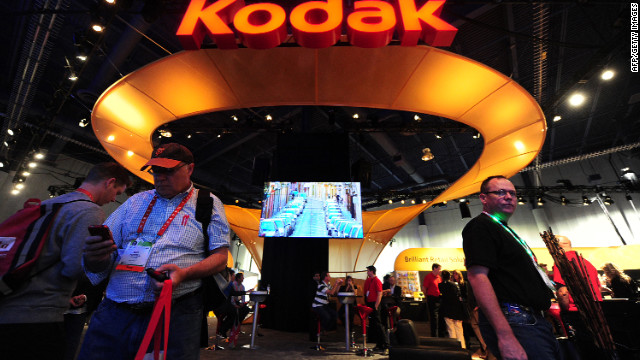
Former trailblazer Kodak files for Chapter 11

ROCHESTER, N.Y. — Kodak's moment has come and gone.
The glory days when Eastman Kodak Co. ruled the world of film photography lasted for over a century. Then came a stunning reversal of fortune: cutthroat competition from Japanese firms in the 1980s and a seismic shift to the digital technology it pioneered but couldn't capitalize on. Now comes a wistful worry that this icon of American business is edging toward extinction.
Kodak filed for Chapter 11 bankruptcy protection on Thursday, raising the specter that the 132-year-old trailblazer could become the most storied casualty of a digital age.
Already a shadow of its former self, cash-poor Kodak will now reorganize in bankruptcy court, as it seeks to boost its cash position and stay in business. The Rochester, N.Y.-based company is pinning its hopes on peddling a trove of photo patents and morphing into a new-look powerhouse built around printers and ink. Even if it succeeds, it seems unlikely to ever again resemble what its red-on-yellow K logo long stood for — a signature brand synonymous in every corner of the planet with capturing, collecting and sharing images.
"Kodak played a role in pretty much everyone's life in the 20th century because it was the company we entrusted our most treasured possession to — our memories," said Robert Burley, a photography professor at Ryerson University in Toronto.
Its yellow boxes of film, point-and-shoot Brownie and Instamatic cameras, and those hand-sized prints that made it possible for countless millions to freeze-frame their world "were the products used to remember — and really define — what that entire century looked like," Burley said.
"One of the interesting parts of this bankruptcy story is everyone's saddened by it," he continued. "There's a kind of emotional connection to Kodak for many people. You could find that name inside every American household and, in the last five years, it's disappeared."
Kodak has notched just one profitable year since 2004. At the end of a four-year digital makeover during which it dynamited aged factories, chopped and changed businesses and eliminated tens of thousands of jobs, it closed 2007 on a high note with net income of $676 million.
It soon ran smack into the recession — and its momentum reversed.
Years of investor worries over whether Kodak might seek protection from its creditors intensified in September when it hired major restructuring law firm Jones Day as an adviser. Its stock, which topped $94 in 1997, skidded below $1 a share for the first time and, by Jan. 6, hit an all-time closing low of 37 cents.
Three board members recently resigned, and last week, the company announced that it realigned and simplified its business structure in an effort to cut costs, create shareholder value and accelerate its long-drawn-out digital transformation.
The human toll reaches back to the 1980s, when Tokyo-based Fuji, an emerging archrival, began to eat into Kodak's fat profits with novel offerings like single-use film cameras. Beset by excessive caution and strategic stumbles, Kodak was finally forced to cut costs. Its long slide had begun.
Mass layoffs came every few years, unraveling a cozy relationship of company and community that was perhaps unequaled in the annals of American business. Kodak has sliced its global payroll to 18,800 from a peak of 145,300 in 1988, and its hometown rolls to 7,100 from 60,400 in 1982.
Veteran employees who dodged the well-worn ax are not alone in fearing what comes next. Some 25,000 Kodak retirees in this medium-sized city on Lake Ontario's southern shore worry that their diminished health coverage could be clawed back further, if not disappear, in bankruptcy court.
It's a long cry from George Eastman's paternalistic heyday.
Founded by Eastman in 1880, Kodak marketed the world's first flexible roll film in 1888 and turned photography into an overnight craze with a $1 Brownie camera in 1900. Innovation and mass production were about to put the world into cars and airplanes, the American Century was unfolding, and Kodak was ready to record it.
"It's one of the few companies that wiggled its way into the fabric of American life and the American family," said Bob Volpe, 69, a 32-year employee who retired in 1998. "As someone at Kodak once said, `We put chemicals in one end so our customers can get memories out the other.'"
Intent on keeping his work force happy — they never organized a union — Eastman helped pioneer profit-sharing and, in 1912, began dispensing a generous wage dividend. Going to work for Kodak — "taking the life sentence," as it was called — became a bountiful rite of passage for generations.
"Most of the people who worked at Kodak had a middle-class life without a college education," Volpe said. "Those jobs paid so well, they could buy a boat, two cars, a summer place, and send their kids to college."
Propelled by Eastman's marketing genius, the "Great Yellow Father" held a virtual monopoly of the U.S. photographic industry by 1927. But long after Eastman was stricken with a degenerative spinal disorder and took his own life in 1932, Kodak retained its mighty perch with a succession of innovations.
Foremost was Kodachrome, a slide and motion-picture film extolled for 74 years until its demise in 2009 for its sharpness, archival durability and vibrant hues. In the 1960s, easy-load Instamatic 126 became one of the most popular cameras ever, practically replacing old box cameras. In 1975, engineer Steven Sasson created the first digital camera, a toaster-size prototype capturing black-and-white images at a resolution of 0.1 megapixels.
Through the 1990s, Kodak splurged $4 billion on developing the photo technology inside most of today's cellphones and digital devices. But a reluctance to ease its heavy reliance on film allowed rivals like Canon Inc. and Sony Corp. to rush largely unhindered into the fast-emerging digital arena. The immensely lucrative analog business Kodak worried about undermining too soon was virtually erased in a decade by the filmless photography it invented.
"If you're not willing to cannibalize yourself, others will do it for you," said Mark Zupan, dean of the University of Rochester's business school. "Technology is changing ever more rapidly, the world's becoming more globalized, so to stay at the top of your game is getting increasingly harder."
In November, Kodak warned it could run out of cash in a year if it didn't sell 1,100 digital-imaging patents it's been shopping around since July. Analysts estimate they could fetch at least $2 billion.
In the meantime, Kodak has focused its future on new lines of inkjet printers that it says are on the verge of turning a profit. It expects printers, software and packaging to produce more than twice as much revenue by 2013 and account by then for 25 percent of the company's total revenue, or nearly $2 billion.
CEO Antonio Perez said in a statement Thursday that the bankruptcy filing is "a necessary step and the right thing to do for the future of Kodak." The company has secured $950 million in financing from Citigroup Inc., and expects to be able to operate its business during bankruptcy reorganization and pay employees.
On its website, Kodak assured customers that the nearly $1 billion in debtor-in-possession financing would be sufficient to pay vendors, suppliers and other business partners in full for goods and services going forward. The bankruptcy filing in the Southern District of New York does not involve Kodak's international operations.
"To be able to hop from stone to stone across the stream takes great agility and foresight and passion for excellence, and Kodak is capable of that. They have some killer stuff in inkjet printing. It's becoming a profitable product line but what they need is the runway to allow it to take off," Zupan said. "As the saying goes, `the best way to anticipate the future is to invent it.'"
The company and its board are being advised by Lazard, FTI Consulting Inc. and Sullivan & Cromwell LLP. Dominic DiNapoli, vice chairman of FTI Consulting, will serve as chief restructuring officer. Kodak expects to complete its U.S.-based restructuring during 2013.

Farm Land Flip Flop? Hawaii Ag Officials Change Position on Hoopili

Three years ago, state agriculture officials insisted that losing hundreds of acres of Oahu farm land to development would be a serious setback for local food production in Hawaii.
Earlier this month, state agriculture officials said losing the same Oahu farm land was not a problem.
Hawaii's agriculture department has reversed its position on one of the largest master-planned communities to be proposed in the state. And that's prompting people to ask: what happened?
A review of documents filed in the matter and interviews with state official sheds more light on how positions have changed from 2009 to present.
Hoopili would include 11,750 homes and five schools, and displace 1,500 acres of prime agricultural land and four farms.
Republican Gov. Linda Lingle’s administration opposed the development when it was first before the state land commission in 2009.
Now, Democratic Gov. Neil Abercrombie has come out in favor of it, surprising and disappointing his environmental supporters who say he'd promised them the project wouldn't go through.
The apparent reversal is welcome news to the developer, D.R. Horton, which has argued that Hoopili would provide much needed affordable housing to a growing population. But it was a major blow to environmental groups who were counting on Abercrombie to oppose the project.
“What changed from 2009 to 2011? Not the land. Not the quality of the land,” said Donna Wong, executive director of Hawaii’s Thousand Friends.
As it did in 2009, Horton needs to win approval from the state Land Use Commission to reclassify 1,500 acres for the development. Lingle was governor and her agriculture department chief testified against it at LUC hearings. Horton's application was denied because it lacked an adequate timeline for completing the project.
The case is now before commissioners for a second time; a decision is expected later this year. And this time testimony coming out of the agriculture department is radically different.
Loading

Back In 2009

Lingle appointee, Sandra Kunimoto, chair of the Department of Agriculture, submitted written testimony to commissioners strongly opposing the development in 2009.
Ag land that can produce excellent yields “is a finite and irreplaceable resource in Hawaii,” she wrote.
Hoopili would result in the sudden loss of 14 percent of the available farm land on Oahu, she testified.
And the loss would be equal to the 42 percent of the high quality ag land lost on Oahu during the past 18 years, she said.
While D.R. Horton has argued that there is plenty of agricultural land in the state that can be used for farming, Kunimoto said that relocating the area farms, Aloun Farms in particular, is not so easy.
Aloun Farms is one of the largest farms on Oahu and produces a wide range of produce.
Kunimoto said that even if the farms could be moved “there are a number of negative impacts attributable to relocation.”
She pointed out that over the years, farmers develop in-depth knowledge about such things as soil quality, climate conditions and optimal harvesting techniques.
The difficulties of relocation were repeated in comments the Department of Agriculture submitted on Hoopili’s environmental impact statement in 2009.
“Farm relocation is likely to be expensive and time-consuming, even with the business-tested skills of the affected farmers,” according to the department.
The document notes that rent for alternative ag land is likely to be higher, and that irrigation water on the North Shore, a prime location for relocation, was contaminated and couldn’t be used on edible crops.
Kunimoto said that if the LUC were to grant Horton’s petition than the developer, as a condition of approval, should have to set aside an equal amount of land for agricultural use. This could be accomplished by setting aside lands the company already owns or by purchasing other lands.
The “negative impact upon the State that will result from the loss of 1,407 acres of highly productive agricultural land generally cannot be denied and such impact should be mitigated if the petition area is reclassified,” she wrote.

Move Ahead To 2012

The 1,407-acre proposed condition that Horton should come up with other farm lands to replace Hoopili isn't something that Abercrombie's administration is seeking.
Russell Kokubun, chairman of the Department of Agriculture, and a former senator who has championed the protection of important ag lands, was appointed by Abercrombie to replace Kunimoto.
He testified earlier this month that the department is supporting the project for two reasons: Horton plans to integrate agriculture into the urban development and more agricultural land is expected to become available for farming.
Horton has said that agriculture will be an important component of Hoopili, which it promotes as the “first community to integrate smart, sustainable food production.”
According to the developer's website: “Not only will Ho‘opili’s Urban agriculture program create beautiful green landscapes for residents to enjoy, it will also provide a source of fresh and healthy, locally-produced food for their consumption.”
Horton has told commissioners and the Department of Agriculture that it will set aside 251 acres within the development for agricultural use. This includes 159 acres for farming operations, eight acres for community gardens and 84 acres for residential home gardens.
Kokubun told the commission that the Galbraith Trust, one of Hawaii's biggest landowners, was in the process of transferring 1,700 acres of ag land to the Department of Agriculture, which could be available for displaced farmers. This is in addition to other ag parcels in central Oahu — a 150-acre ag park that is under development and a separate 400-acre piece of land.
Kokubun testified that the areas in central Oahu still need infrastructure to transport water for irrigation, and that there were inadequate water resources on the Galbraith Trust parcel. He said the Department of Agriculture would work to obtain funding for the improvements.
He also told Civil Beat in an interview Wednesday that 90,000 acres of ag lands had been designated as "Important Agricultural Lands" in recent years. The designation means that the lands must remain agricultural in perpetuity. The only way to reclassify the lands is through a two-thirds vote by the Senate and House of Representatives.
He estimated that on Oahu landowners had voluntarily designated about 1,500 acres as Important Agricultural Lands. Statewide, he said it was 90,000 acres.
Much of the testimony from 2009 focused on the loss of some of Oahu's most fertile land. But Kokubun testified that with improvements in technology, lower quality lands could also prove to be very good for farming.
He told Civil Beat that his position in support of Hoopili was also based on his respect for county authority in determining which lands can be developed. The county, in its Ewa Development Plan, slated the Hoopili plot for urban development back in the 1990s.
Hearings continue Thursday with further testimony from state officials from the Office of Planning and Permitting and the Department of Transportation. A main issue will be whether the gridlock traffic on the leeward side of the island can accommodate the development. The Sierra Club will then present its case, focusing on the economics of ag and soil quality.

Wednesday, January 18, 2012

Hawaii girls school to market campus overlooking Waikiki as venue for weddings, events

HONOLULU — A Hawaii school for girls is marketing the campus as a location to hold weddings and events.
La Pietra School signed an exclusive agreement last month with Distinctive Homes Hawaii Real Estate to market the five-acre campus as a wedding and event venue.
The campus is on the slopes of the iconic Diamond Head crater. Distinctive Homes Hawaii CEO Warren Daniel says that makes for an ideal venue offering a "magnificent panorama of Waikiki."
The La Pietra estate and school has previously been only available as a private venue to graduates of the school.
Walter F. Dillingham purchased the property in 1919 and built La Pietra, a lavish Italian villa for his wife, Louise Olga Gaylord, of Florence, Italy.

Tuesday, January 17, 2012

Hawaii marine sanctuary’s “Ocean Count” slated for peak of whale-watching season

Will you be in the Islands during peak whale season? If so, consider taking part in the Hawaiian Islands Humpback Whale National Marine Sanctuary’s Ocean Count.

Both Hawaii residents and visitors are invited to take part in the whale-watching volunteer project slated for 8 a.m. to 12:15 p.m. on three Saturdays, Jan. 28, Feb. 25 and March 31 on the shores of Oahu, Kauai and the Big Island.

The annual count, which started in 2002, relies on volunteer help to estimate whale population and distribution figures in the sanctuary. The census, organized by the National Oceanic and Atmospheric Administration, doesn't yield scientifically accurate results, but it does supplement scientific information. For registration details, click here.

If you join the ranks of volunteers, expect to be busy. On average, humpback surface to breathe every 10 to 15 minutes, but can remain submerged for as long as 45 minutes. Calves must rise to the surface every three to five minutes. For more information about whale behavior, click here.

Scientists estimate that there are 20,000 humpbacks in the North Pacific. An estimated 12,000  swim to Hawaii's waters to mate and nurse their young, typically between September and March. Since 2006, the annual count has tracked a steady rise in the humpback whale population visiting the sanctuary.
 Hawaii_Maui_whales

Thanks to the increase in the number of whales gliding along in the channels between the Islands, it is now fairly easy to spot them from shorelines. Earlier this month, a pair of humpback whales — likely a mother and its yearling — turned up at the edge of an actual shoreline. (The pair followed a commercial fishing boat into Honolulu Harbor then lingered hours around piers near Aloha Tower.)

The Hawaiian Islands Humpback Whale National Marine Sanctuary lies within the shallow (less than 600 feet), warm waters surrounding the main Hawaiian Islands, constitutes one of the world's most important humpback whale habitats.

Hawaii is the only state in the nation where humpback whales mate, calve, and nurse their young.  According to the National Oceanic and Atmospheric Administration, humpbacks may find the Islands suitable because of warm waters, underwater visibility, variety of ocean depths, and the lack of natural predators. Mothers can be seen breaching alongside their calves and males can be seen competing with one another for females in fierce head-to-head battles.

For more information about the sanctuary and the Ocean Count, click here.


To subscribe to HAWAII Magazine, click here.

Photos: courtesy of National Oceanic and Atmospheric Administration (NOAA) HIHWNMS: Fisheries Permit No. 782-171

Monday, January 16, 2012

Great White Shark Circles Fishing Boat Off Oahu, Hawaii (VIDEO)

Cue the theme from "Jaws" -- a massive shark was spotted by a pair of fishermen off the coast of Oahu, Hawaii.
Addison Toki caught on camera his encounter with what he believes was a 15-foot great white shark.According to KITV4 News, Toki and his friend Dominick Gaballo were fishing about five miles off Yokohama Bay on the west side of Oahu on January 12, when they spotted one of the ocean's largest predatory fish.
Nearly two decades ago, Toki says he saw a great white shark on the North Shore, but said it pales in comparison to his most recent and up-close encounter. "I see all types of sharks but when you see one like that it's like wow, I'm blown away," Toki said. "This is an unreal trip we'll never forget."
And after viewing his footage, shark expert Kim Holland, who runs the Shark Lab at the Hawaii Institute of Marine Biology at Coconut Island, confirms that the fisherman did indeed spot a Great White.
"You can tell what it is not. It's not a tiger shark. It is not a hammerhead. It is not an oceanic white tip because it doesn't have any white tips on its fins. It's not a black tip. And just the overall shape and coloration and the shape of the tail, it all points to it being a great white, or a white shark," she told Hawaii News Now.
Holland said it's not rare for great whites to be in Hawaii, but the reason they come to Hawaii is still a mystery.
"It probably makes sense to them, but we don't know what it is yet. Our number of detections, the number of tracks that have been obtained aren't' large enough for us to make those type in interpretations," he explained. "We do know that we've detected them here in every season of the year."
While shark attacks are actually relatively rare, some estimates suggest up to 70 million sharks are killed each year by fishing fleets.
Bans have been passed in recent months on the sale of shark fins, used in a soup traditional to some Asian cultures.
WATCH (Warning: Explicit Language)
VIDEO

Thursday, January 12, 2012

Airlines Cancel More Than 460 Flights on Chicago Snow

United Continental Holdings Inc. (UAL), AMR Corp. (AAMRQ)’s American Airlines and Southwest Airlines Co. (LUV) canceled more than 460 flights in Chicago as a snowstorm moves through the area and delays ripple throughout the nation.
United, the world’s largest carrier, scrubbed 200 flights at Chicago O’Hare International Airport, including 20 percent of flights on its main jet fleet and 25 percent by regional partners, said Mary Ryan, a spokeswoman for the Chicago-based company.
Ninety-minute delays were reported at Chicago’s O’Hare earlier today, while New Jersey’s Newark Liberty International Airport and Philadelphia each had hour-long delays for some flights because of wind and low visibility, respectively, according to FlightAware.com, which tracks flight data. More than 840 flights have been canceled across the U.S. today, the site said.
Snow accumulations may reach 8 inches in the Chicago area, said Charles Mott, a National Weather Service meteorologist in Romeoville, Illinois. The weather service has issued winter storm warnings and advisories stretching across the Midwest.
A winter weather advisory means falling snow will make travel difficult. A winter storm warning means significant snowfall is expected and travel will be dangerous.
American Airlines and its American Eagle regional carrier scrubbed 166 flights, Mary Frances Fagan, a company spokeswoman, said in an e-mail. O’Hare is a hub for American and United Continental.
Southwest said it stopped all service at Midway Airport between 1 and 6 p.m. That amounted to about 100 flights, the Chicago Department of Aviation said in a statement.

Wednesday, January 11, 2012

Obama visits Chicago today


It may not be the most comfortable time for President Barack Obama to visit Chicago.
Obama will be in his hometown for fundraising and re-election events Wednesday, two days after William Daley - a member of the city's most famous political family - resigned as White House chief of staff. And a new book claims first lady Michelle Obama had a sometime tumultuous relationship with Rahm Emanuel, whom Daley replaced as Obama's top aide when Emanuel left to successfully run for Chicago mayor.
The visit also comes amid concern about whether Chicago residents, who left by the busloads to campaign around the country for the then-U.S. senator in 2008, remain enamored enough to do the same for Obama this year.
But political observers and Democratic officials said they don't sense any tensions that would deter the city's powerful political forces from turning out for Obama's re-election campaign - even as some were left scratching their heads over Daley's abrupt White House departure. It came nearly a year earlier than expected and amid doubts that the former bank executive and Commerce secretary was ever right for the job.
White House officials said Daley would be "very involved" in Obama's re-election campaign and serve as co-chairman when he returns to Chicago at the end of January. But his stint in the White House was a powerful display of the city's continued influence in Washington and indicates that Obama will be able to depend on the Daley family's political dynasty.
Although Daley has not detailed why he left Washington after pledging to stay with Obama through the 2012 election, many believe the decision was more personal than political. Daley's brother, recently retired longtime Chicago Mayor Richard M. Daley, lost his wife in November after her long fight with cancer.
"You have to think he's thinking, 'How much have I seen (my family) and how often have I been able to just kind of drop whatever and stop by for dinner or even a cup of coffee,'" said Danny Davis, a Chicago congressman who has been part of the city's political scene for decades.
White House spokesman Jay Carney reiterated on Tuesday that Obama was surprised by Daley's decision to leave but "extremely grateful" for his leadership and friendship in a year that included the Arizona shootings that injured U.S. Rep. Gabrielle Giffords, the killing of Osama bin Laden, and the signing of several international trade deals.
But Daley's year as Obama's chief manager and gatekeeper also featured stumbles with Congress and grumbles that he was not the right choice to coordinate an intense White House operation of ideas, egos and decisions. So in a city where the art of political maneuvering was nearly perfected by Daley's father, legendary Chicago Mayor Richard J. Daley, there is nagging suspicion that there was more to his decision.
"People are talking about it," said Cliff Kelley, a former city alderman and radio talk-show host who often deals with political themes. "They don't think he would walk away at this very important time."
Obama on Wednesday is scheduled to appear at the University of Illinois-Chicago and two private fundraising events at the homes of Chicago media mogul Fred Eychaner and Bear Stearns executive Stuart Taylor.
Davis said he wasn't worried that a new book written by New York Times reporter Jodi Kantor would impact Obama's relationship with Emanuel. The book, released this week, contends that tensions developed between Michelle Obama and Emanuel while he was chief of staff, particularly over the White House's management of health care reform agenda.
"It does not appear to me that there is a great conflict," the congressman said.
Emanuel said last week that his relationship with the Obamas remained strong. The new Chicago mayor and his wife attended a private party at the White House a few weeks ago, and Emanuel said he and the president spoke as recently as Saturday. Emanuel also recently made a joint appearance with Michelle Obama in Chicago as part of a campaign to eliminate "food deserts," or areas with few or no grocery stores.
Emanuel also remains a staunch defender of the president, but has said his duties as mayor would make it impossible for him to campaign for Obama as he has in the past. Still, he spoke at the Iowa Democratic Party's largest annual fundraiser in November, and a few weeks earlier during his appearance on NBC's "Meet The Press," he touted Obama's accomplishments and took shots at Republican presidential candidate Mitt Romney.
Obama's campaign said other Chicagoans also are rallying behind his re-election campaign. "In Illinois alone, volunteers have already made over 260,000 phone calls, have held over 900 events," Ben Finkenbinder, a spokesman for Obama for America, said in an email.
But others doubt Obama would see the outpouring of support he received in his hometown in 2008. Dawn Clark Netsch, a prominent Chicago Democrat who once served as state comptroller and now teaches at Northwestern University's law school, wonders whether young people will campaign like they did when they felt they were part of history.
"What I hear is the young people aren't talking about this as much," she said. "This is not the transformational moment it was then."

Tuesday, January 10, 2012

Waikiki sand replenishing will affect box jellyfish


When the next box jellyfish influx arrives in about a week, there could be some changes to the usual locations the jellies frequent. 
The reason?  A three-month project to widen a portion of Waikiki Beach.
Heavy equipment is put into place in preparation for the arrival of 24-hundred cubic yards of sand that will be pumped onto Waikiki Beach. 
The Diamond Head basin of Kuhio Beach, referred to as two Delta by city lifeguards, will serve as a detention area for the sand drawn from offshore. 
It is the same area where box jellyfish spawn every month. 
"For the next three months if this area is filled with sand then clearly the animals won't be able to accumulate inside two-delta and they will be more disperse out in the reef," said University of Hawaii researcher Angel Yanagihara.
For the past 14 years she and her assistants have collected the jellies that come ashore at night, 7-to-10 days after a full moon. 
She says the $2.5 million sand replenishing project will likely disrupt the oldest continuous data set in the world on a jellyfish species.
"We actually collect every single animal and take them out from the water so they don't go back out with the next high tide," she said.  "We presumed then that the animals won't get trapped in this sea walled area and they'll probably be more out in the reef."
Which means for those who are used to seeing lower numbers after dawn.
"That may not be the case for the next three months because the animals will probably be still more dispersed out in the near reef where surfers come, so early morning surfers may notice more jellies out there," said Yanagihara.
The three-month disruption in Waikiki will allow Yanagihara and her crew to visit other islands that are reporting jellies as well.
"The Big Island, Molokai and Kauai so we have contact on those islands and we are probably planning to do field trips and go offshore some of the other islands and collect animals there."